
This post, and the photos, are shared with permission of J’s parents. J’s dad is curate of a church in Hertfordshire.
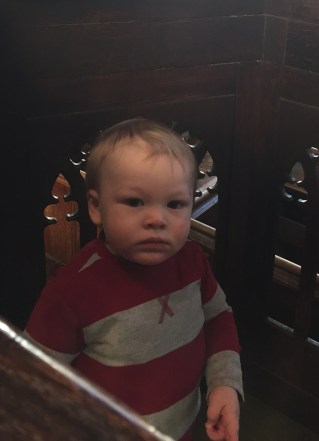
J’s dad writes:
So here is J. – he is 20 months old. Since he was about 2 months he regularly comes to church every Sunday but also for some of the Daily Office. On a Sunday he sits near the back, but during morning prayer, and when the church is empty, he freely wanders around the church – access to all areas. He even helps with ringing the bell for worship.
What clearly fascinates him is the crucifer. He points out the cross (which he calls church) and all other crosses.
Recently he also insists on being followed by a book.
There is once small cross he loves to pick up and process around. He loves procession practice and at home he uses a ladle and a book when he plays. Interestingly, books like bibles and hymn books are always preferred to his own books when available. He also likes going into the pulpit. If the church could produce a daily office and gospel board book that would be great!

He also loves hot cross buns, but not sure if that is linked to the cross on the top.
We want to enable him to pursue doing this … but at what age could he help out?
Maybe our next church will have to have a boat boy as there are no youth servers at our current church.
Here are a few thoughts I had when I read this:
- I agree it’s interesting he chooses Bibles and hymn books over his own books when they’re available. It shows that even at 20 months he somehow perceives a difference between “holy books used in worship” and “books read for pleasure.” Of course, there is crossover here, but as a basic distinction, it’s important. And there are of course ramifications here for our understanding of when to admit children to Holy Communion – if J can understand the difference between “ordinary books” and “God books,” could he understand the difference between “ordinary bread” and “God bread”?
- J has engaged with worship through nothing more than simply being exposed to it on a regular basis. Just like when we take children shopping, or swimming, or on train journeys, or to the doctor, and they begin to explore these experiences through play, J has done the same with church. And the same skills parents use in these other activities – helping explain what’s going on, making sure their children can see and participate – can be used in church.
- J’s understanding is age-appropriate. It is not abstract or verbal. It is sensory and imaginative.

J carrying the Gospel book in procession. - If J loves processing, why not incorporate that into worship? Maybe get a selection of different small crosses, and once a month, or more often, invite any child who wants to to choose a cross and join the procession. There could be a special basket at the front where we leave our crosses by the altar.
- Very small children can help bring up the bread and wine, if an adult or teenager has helped them figure out how to carry it safely, and is available to walk beside them as a second pair of hands, if needed.
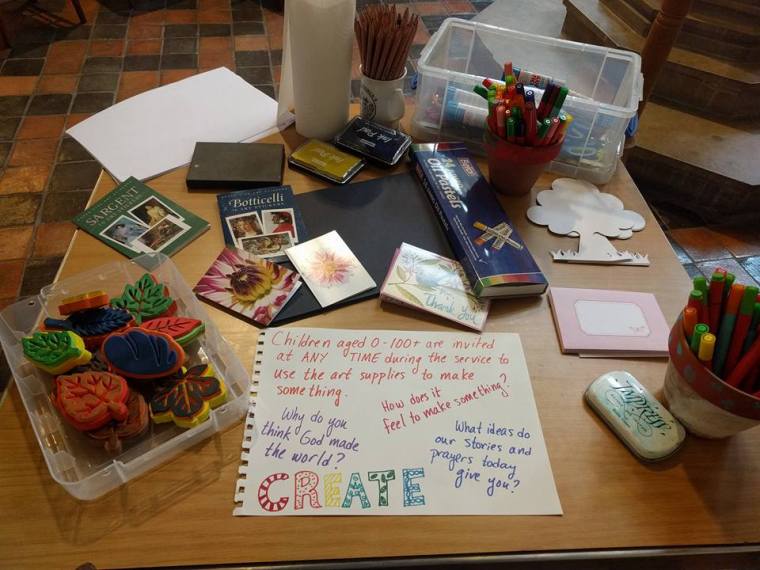
- These are also the sorts of things children can engage with through play in a good children’s play area in church. You can see some ideas here, and here, and here.
- Once children have been admitted to communion – whether at confirmation or before – the canons of the church allow them to serve as Eucharistic ministers and help distribute the chalice at communion.
- Now I really want to create a Gospel Book and Daily Office board book!




 A few weeks ago, I visited
  Today’s post is written by the Revd. Lucy Davis, from
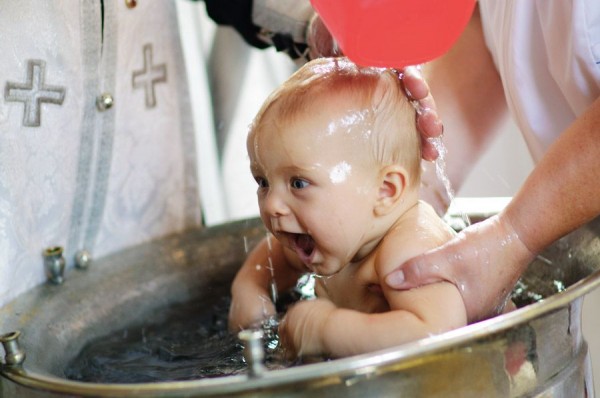
  And therein was the first turning, a turning of vocabulary. Parents approached us asking for Christenings, and we would persist in talking about Baptism – on our website, on the phone, in our literature. To what end? Yes, to the end of being theologically and ecumenically correct, but also to the end of immediately excluding, of making families feel as though they were asking for the wrong thing, on the back foot and inadequate in the face of our secret Church language. So there was the first change. If a family asks for a Christening, we now talk about a Christening. On the phone, by e mail, on our website. Christening it is. I have climbed down from my high horse. At the service, we unpack these words a bit, talking about the oil of Chrism as the priest and parents mark the baby’s head. Suggesting we dunk the baby in the font like hand washing some clothes, in keeping the original meaning of the word Baptism (this one usually met with a little light laughter).


 After Sandra Millar’s wonderful day with us last November, I resolved to put a few of the tips from the Christenings Project into practice in my own church. We have a large cohort of children in the 7 – 14 age range, but very few babies and toddlers. This has left our under-5s volunteers demoralised, and, of course, made us feel we’re missing out on the joyful presence of toddlers, and on the chance to provide a community and a place of meaning and hope for them and their parents.
 Each email was simple and to the point – we have a toddler-friendly event coming up. Join us! We’d love to see you!
 Children's Ministry in St Albans Diocese