
 After Sandra Millar’s wonderful day with us last November, I resolved to put a few of the tips from the Christenings Project into practice in my own church. We have a large cohort of children in the 7 – 14 age range, but very few babies and toddlers. This has left our under-5s volunteers demoralised, and, of course, made us feel we’re missing out on the joyful presence of toddlers, and on the chance to provide a community and a place of meaning and hope for them and their parents.
And yet, we were still doing Christenings. So these families were out there! We just needed to connect with them better.
What was already in place:
We had a good Jr Church, so I felt confident that families who did start coming back to us would be happy with what they found.
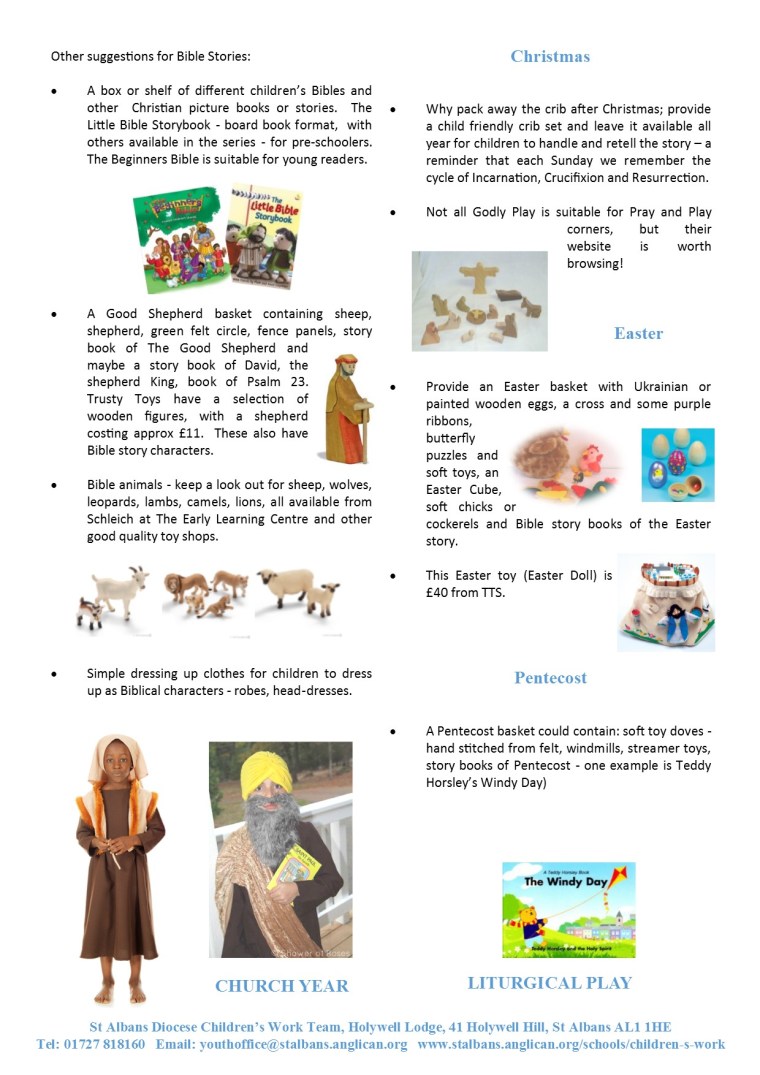
We have a children’s area in the church, specifically for under-5s, with spiritually imaginative toys.
There has been a deliberate, long-term, concerted effort to make the culture of the church more welcoming to young families.
What I did:
I have a tendency to try and do Everything! At! Once! and burn out, so I restricted myself to two small changes:
- Send email invitations to specific events.
- Make sure families who come back after a Christening are welcomed.
Using Mailchimp, which is a free and pretty user-friendly website for sending mass mailings, I created a mailing list composed just of families who have had children christened in our church in the last five years.
Then, a week or two before our Crib service, our Candlemas service, our Mothering Sunday service, Holy Week, and our All-Age Trinity Sunday service, I sent very simple emails to these lists. The subject line was, “Come celebrate with us!”
 Each email was simple and to the point – we have a toddler-friendly event coming up. Join us! We’d love to see you!
For the Crib service one, I reminded them that holding their child and singing “Silent Night” by candlelight was a special thing they wouldn’t want to miss. For the Holy Week one, I wrote a short paragraph as a “p.s.” reminding them that if they came on Easter Sunday they’d see the new Paschal candle, and they might remember it from their child’s christening. For Candlemas, I told them that we re-light all the Christening candles at the end of the service, so they can bring their child’s if they want (and if they’ve lost it, we’ll give them a new one).
And then I put three people on notice to spot any families with toddlers who they didn’t recognise, and make sure they got talked to after the service.
What happened:
At first, very little. Our Crib service was the usual – neighbourhood children who we see once a year – and the sheets we put in our service sheet asking for contact details were mostly ignored. Candlemas and Mothering Sunday were our usual older children and not much else.
But over the last few months, there’s been a slow upward shift. Here’s what’s happened:
- Christening families have started coming back – and not just to our all-age services, but to other Sundays as well.
- Thanks to having people on hand to welcome them, they’ve formed relationships with people at church – not just with the vicar and myself.
- Knowing that I had people prepared to welcome new parents meant I was less stressed after the service – if I had to go deal with something else, or eight other people needed to talk to me, and I didn’t get to greet the new family, I knew someone else would.
- Our under-5s volunteers now feel confident that when they prepare a Jr Church session, there will be some kids there to participate in it. Their morale has improved.
- The parents know that there is a good Jr Church there and so they feel comfortable bringing their kids. (NB: if you don’t have Jr Church, then think about what you can do on Sundays to make families of toddlers feel more comfortable being there. Children’s corners, welcomers, a reminder from the vicar to the congregation to help out parents who need an extra hand … ).
There are three Christening families who I would now consider “regular” attendees of our church (which means 2 – 3 Sundays a month), with 5 young children between them. There’s a fourth family we might see every 6 weeks or so. For a church our size, this is significant, and means that we now have what feels like a “group” at that age. (This also means that any new families who come now won’t feel like the only family with toddlers.)
What I Learned:
- You need a few allies in the congregation – to welcome the new parents, to be on hand to help them during the service, to negate the effects of the “sssshhhhh” brigade or say “it’s okay – they’re just playing” to anyone giving the stink-eye to a non-disruptive child.
- Sandra was right – repetition matters. One invitation isn’t going to get results. Ten invitations will.
- Several of the families who have come back have said they were planning to come back anyway when their children got a bit older – parents of babies and toddlers are hesitant to come to church out of fear of being disruptive. Assurance that it’s okay if their kids are behaving like kids might help them come back a little earlier than they were planning to. And if it doesn’t, then it’s important to keep up the invitations for at least five years after the Christening, so that when they are ready to come back, they know what’s going on and that they’re welcome.
- Keep it as simple as possible: “It’s Christmas. There’s a Crib service. Christmas Eve, 4 pm. It’ll be lovely and moving. Come and bring your kids.”



 This is a wonderful article
 When I run training sessions, I often refer people to this blog to get the slides I used – these are for the “Getting Started in Children’s Ministry” training held on 15th March 2017 at St Andrew’s in Biggleswade. Click on the link at the bottom to download.
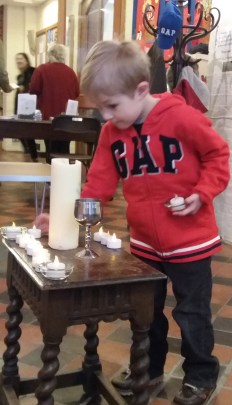 Those of you who have been to any of my workshops or training sessions might have heard me talk about “imaginative spiritual play” and how to facilitate it. Yesterday, Patrick, aged 5, gave me a good example.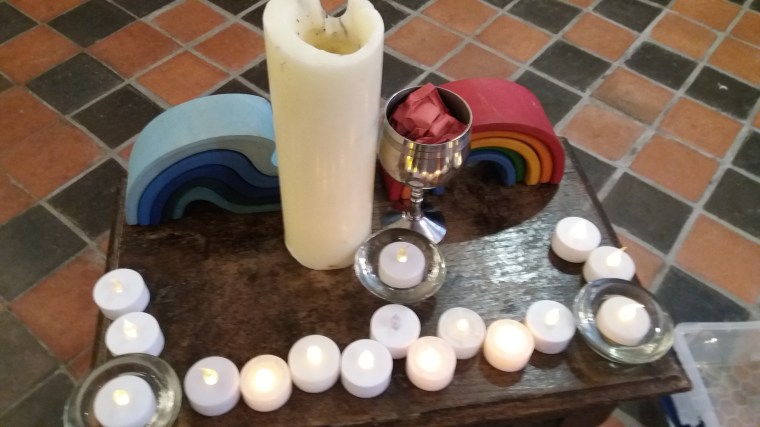
 Using the rainbow and the water wave, he briefly recapped the Noah story, and then asked if we could take out the plastic animals from the cupboard to play with them. As the service was about to start, so we had to go into the main worship area, I said no, but reminded him there was a Noah’s Ark toy in the church’s Pray and Play area if he wanted to go and play with that during the start of the service, before Sunday School began.
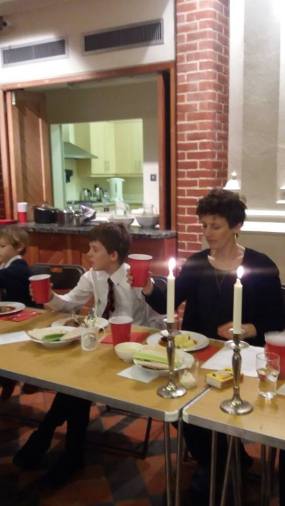 Tomorrow is our day on Creative Holy Week for All Ages – so for those of you who can’t be there, here are all the resources.
 Jenny Paddison introduced us to Starting Rite, which is a 5-week programme of spiritual nurture for carers and babies together, based on the type of course run by Sure Start centres. You can
 Children's Ministry in St Albans Diocese